NEET-XII-Chemistry
07: Chemistry in Everyday Life
Note: Please signup/signin free to get personalized experience.
Note: Please signup/signin free to get personalized experience.
10 minutes can boost your percentage by 10%
No item to list.
Note: Please signup/signin free to get personalized experience.
- Qstn #6Which forces are involved in holding the drugs to the active site of enzymes?
Ans : Either of the following forces can be involved in holding drugs to the active sites of enzymes.
(i) Ionic bonding
(ii) Hydrogen bonding
(iii) Dipole - dipole interaction
(iv) van der Waals force
- Qstn #7While antacids and antiallergic drugs interfere with the function of histamines, why do these not interfere with the function of each other?
Ans : Specific drugs affect particular receptors. Antacids and anti-allergic drugs work on different receptors. This is the reason why antacids and anti-allergic drugs do not interfere with each other’s functions, but interfere with the functions of histamines.
- Qstn #8Low level of noradrenaline is the cause of depression. What types of drugs are needed to cure this problem? Name two drugs.
Ans : Anti-depressant drugs are needed to counteract the effect of depression. These drugs inhibit enzymes catalysing the degradation of the neurotransmitter, noradrenaline. As a result, the important neurotransmitter is slowly metabolised and then it can activate its receptor for longer periods of time.
Two anti-depressant drugs are:
(i) Iproniazid
(ii) Phenelzine
- Qstn #9What is meant by the term ‘broad spectrum antibiotics’? Explain.
Ans : Antibiotics that are effective against a wide range of gram-positive and gram-negative bacteria are known as broad spectrum antibiotics. Chloramphenicol is a broad spectrum antibiotic.
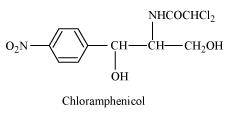
It can be used for the treatment of typhoid, dysentery, acute fever, pneumonia, meningitis, and certain forms of urinary infections. Two other broad spectrum antibiotics are vancomycin and ofloxacin. Ampicillin and amoxicillin -synthetically modified from penicillin - are also broad spectrum antibiotics.
- Qstn #10How do antiseptics differ from disinfectants? Give one example of each.
Ans : Antiseptics and disinfectants are effective against micro-organisms. However, antiseptics are applied to the living tissues such as wounds, cuts, ulcers, and diseased skin surfaces, while disinfectants are applied to inanimate objects such as floors, drainage system, instruments, etc. Disinfectants are harmful to the living tissues.
Iodine is an example of a strong antiseptic. Tincture of iodine (2 - 3 percent of solution of iodine in alcohol - water mixture) is applied to wounds. 1 percent solution of phenol is used as a disinfectant.
- Qstn #11Why are cimetidine and ranitidine better antacids than sodium hydrogen carbonate or magnesium or aluminium hydroxide?
Ans : Antacids such as sodium hydrogen carbonate, magnesium hydroxide, and aluminium hydroxide work by neutralising the excess hydrochloric acid present in the stomach. However, the root cause for the release of excess acid remains untreated.
Cimetidine and rantidine are better antacids as they control the root cause of acidity. These drugs prevent the interaction of histamine with the receptors present in the stomach walls. Consequently, there is a decrease in the amount of acid released by the stomach. This is why cimetidine and rantidine are better antacids than sodium hydrogen carbonate, magnesium hydroxide, and aluminium hydroxide.
- Qstn #12Name a substance which can be used as an antiseptic as well as disinfectant.
Ans : Phenol can be used as an antiseptic as well as a disinfectant. 0.2 percent solution of phenol is used as an antiseptic, while 1 per cent of its solution is used as a disinfectant.
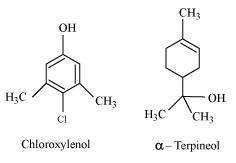
- Qstn #13What are the main constituents of dettol?
Ans : The main constituents of dettol are chloroxylenol and α-terpineol.
- Qstn #14What is tincture of iodine? What is its use?
Ans : Tincture of iodine is a 2 - 3 percent solution of iodine in alcohol - water mixture. It is applied to wounds as an antiseptic.
- Qstn #15What are food preservatives?
Ans : Food preservatives are chemicals that prevent food from spoilage due to microbial growth. Table salt, sugar, vegetable oil, sodium benzoate (C6H3COONa), and salts of propanoic acid are some examples of food preservatives.
- Qstn #16Why is use of aspartame limited to cold foods and drinks?
Ans : Aspartame becomes unstable at cooking temperature. This is the reason why its use is limited to cold foods and drinks.
- Qstn #17What are artificial sweetening agents? Give two examples.
Ans : Artificial sweetening agents are chemicals that sweeten food. However, unlike natural sweeteners, they do not add calories to our body. They do not harm the human body. Some artificial sweeteners are aspartame, saccharin, sucrolose, and alitame.
- Qstn #18Name a sweetening agent used in the preparation of sweets for a diabetic patient.
Ans : Artificial sweetening agents such as saccharin, alitame, and aspartame can be used in preparing sweets for diabetic patients.
- Qstn #19What problem arises in using alitame as artificial sweetener?
Ans : Alitame is a high potency sweetener. It is difficult to control the sweetness of food while using alitame as an artificial sweetener.
- Qstn #20How are synthetic detergents better than soap?
Ans : Soaps work in soft water. However, they are not effective in hard water. In contrast, synthetic detergents work both in soft water and hard water.
Therefore, synthetic detergents are better than soaps.