NEET-XII-Chemistry
01: Haloalkanes and Haloarenes
Note: Please signup/signin free to get personalized experience.
Note: Please signup/signin free to get personalized experience.
10 minutes can boost your percentage by 10%
Note: Please signup/signin free to get personalized experience.
- #1 - Haloalkanes and Haloarenes
- #Section : ISECTION I Page No 285:


- Qstn #2Why is sulphuric acid not used during the reaction of alcohols with KI?
Ans : In the presence of sulphuric acid (H2SO4), KI produces HI

Since
 is an oxidizing agent, it oxidizes HI (produced in the reaction to I2).

As a result, the reaction between alcohol and HI to produce alkyl iodide cannot occur. Therefore, sulphuric acid is not used during the reaction of alcohols with KI. Instead, a non-oxidizing acid such as H3PO4 is used.
- Qstn #3Write structures of different dihalogen derivatives of propane.
Ans : There are four different dihalogen derivatives of propane. The structures of these derivatives are shown below.
(i)
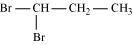
1, 1-Dibromopropane
(ii)

2, 2-Dibromopropane
(iii)
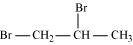
1, 2-Dibromopropane
(iv)

1, 3-Dibromopropane
- Qstn #4Among the isomeric alkanes of molecular formula C5H12, identify the one that on photochemical chlorination yields
- Qstn #4-iA single monochloride.Ans : To have a single monochloride, there should be only one type of H-atom in the isomer of the alkane of the molecular formula C5H12. This is because, replacement of any H-atom leads to the formation of the same product. The isomer is neopentane.

Neopentane
- Qstn #4-iiThree isomeric monochlorides.Ans : To have three isomeric monochlorides, the isomer of the alkane of the molecular formula C5H12 should contain three different types of H-atoms.
Therefore, the isomer is n-pentane. It can be observed that there are three types of H atoms labelled as a, b and c in n-pentane.

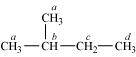
- Qstn #4-iiiFour isomeric monochlorides.Ans : To have four isomeric monochlorides, the isomer of the alkane of the molecular formula C5H12 should contain four different types of H-atoms. Therefore, the isomer is 2-methylbutane. It can be observed that there are four types of H-atoms labelled as a, b, c, and d in 2-methylbutane.