NEET-XI-Biology
05: Morphology of Flowering Plants
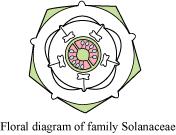
- #9Take one flower each of families Fabaceae and Solanaceae and write its semi-technical description. Also draw their floral diagrams after studying them.
Ans : (1)
Family Fabaceae/Papilionaceae (pea plant)
Fabaceae/Papilionaceae is a sub-family of the Leguminoseae family.
Vegetative features:
Habit: Pinnately compound, alternately arranged with leaf tendrils with the pulvinus present at the leaf base along folacious stipules.
Root: Tap root system with root nodules.
Floral features:
Inflorescence: Racemose, generally axial than terminal
Flower: Zygomorphic and bisexual flowers are found
Calyx: It contains five sepals which are gamosepalous while aestivation is imbricate.
Corolla: It contains five petals (polypetalous) with vexillary aestivation.
Androecium: It consists of ten anthers that are diadelphous with dithecous anthers.
Gynoecium: Monocarpellary superior ovary which is unilocular with marginal placentation.
Fruit: Legume pod with non-endospermic seeds
Floral formula:
Economic importance: Peas are used as vegetables for making various culinary preparations.

(2)
Flowers of Solanum nigrum
Family Solanaceae
Vegetative features:
Habit: Erect, herbaceous plant
Leaves: Simple, exstipulate leaves with reticulate venation
Stem: Erect stem with numerous branches.
Floral features:
Inflorescence: Solitary and axillary
Flowers: Actinomorphic, bisexual flowers
Calyx: Calyx is composed of five sepals that are united and persistent. Aestivation is valvate.
Corolla: Corolla consists of five united petals with valvate aestivation.
Androecium: It consists of five epipetalous stamens.
Gynoecium: It consists of bicarpellary syncarpous superior ovary with axile placentation.
Fruits: Berry
Seeds: Numerous, endospermous
Floral formula: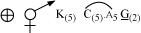
Economic importance: Used for medicinal purposes.