ICSE-X-Biology
Previous Year Paper year:2012
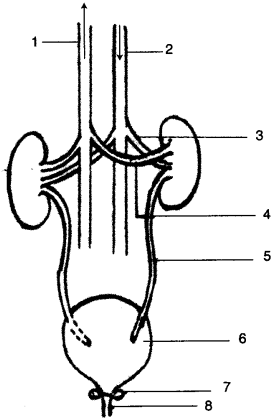
- #4: (a) The diagram below shows the Excretory System of a Human being. Study the same and then answer the questions that follow :
 (a) Name the parts labelled 1, 2, 3 and 4. (a) Give the main function of the parts labelled 5, 6, 7 and 8. (a) Name the endocrine gland which could be added in the diagram and state its location/position. (b) Briefly explain the following : (b) Osmosis (b) Allele (b) Pulse (b) Reflex action (b) Synapse (a) Name the parts labelled 1, 2, 3 and 4. (a) Give the main function of the parts labelled 5, 6, 7 and 8. (a) Name the endocrine gland which could be added in the diagram and state its location/position. (b) Briefly explain the following : (b) Osmosis (b) Allele (b) Pulse (b) Reflex action (b) Synapse (a) The diagram below shows the Excretory System of a Human being. Study the same and then answer the questions that follow :
(a) Name the parts labelled 1, 2, 3 and 4. (a) Give the main function of the parts labelled 5, 6, 7 and 8. (a) Name the endocrine gland which could be added in the diagram and state its location/position. (b) Briefly explain the following : (b) Osmosis (b) Allele (b) Pulse (b) Reflex action (b) Synapse (a) Name the parts labelled 1, 2, 3 and 4. (a) Give the main function of the parts labelled 5, 6, 7 and 8. (a) Name the endocrine gland which could be added in the diagram and state its location/position. (b) Briefly explain the following : (b) Osmosis (b) Allele (b) Pulse (b) Reflex action (b) Synapse (a) The diagram below shows the Excretory System of a Human being. Study the same and then answer the questions that follow :
(a) Name the parts labelled 1, 2, 3 and 4. (a) Give the main function of the parts labelled 5, 6, 7 and 8. (a) Name the endocrine gland which could be added in the diagram and state its location/position. (b) Briefly explain the following : (b) Osmosis (b) Allele (b) Pulse (b) Reflex action (b) Synapse (a) Name the parts labelled 1, 2, 3 and 4. (a) Give the main function of the parts labelled 5, 6, 7 and 8. (a) Name the endocrine gland which could be added in the diagram and state its location/position. (b) Briefly explain the following : (b) Osmosis (b) Allele (b) Pulse (b) Reflex action (b) SynapseAns : (a) (a) 1-Posterior Vena Cava
2-Aorta
3-Renal Artery
4-Renal Vein (a) Part 5 : Ureter - Carry urine from kidneys to urinary bladder.
Part 6 : Urinary bladder - Contain the urine till it is released out.
Part 7: Sphincter muscles - Guards the urethra
Part 8: Urethra - Passage through which urine is given out of the body. (a) Adrenal gland. It is located above each kidney in the form of a cap. (b) (b) Osmosis : The process of movement of solvent molecules from a region of low concentration to a region of higher concentration through a semipermeable membrane. (b) Allele - It is one of the alternative form of the same gene responsible for determining contrasting characteristics. (b) Pulse - It is a wave of pressure of blood passing through the arteries as it is pumped out of the heart. (b) Reflex Action : It is a spontaneous, automatic, involuntary response to a stimulus. (b) Synapse : It is the point of contact between the axon endings of one neuron with the dendrites of the other neuron through where the impulse is transmitted from one neuron to the other. (a) 1-Posterior Vena Cava
2-Aorta
3-Renal Artery
4-Renal Vein (a) Part 5 : Ureter - Carry urine from kidneys to urinary bladder.
Part 6 : Urinary bladder - Contain the urine till it is released out.
Part 7: Sphincter muscles - Guards the urethra
Part 8: Urethra - Passage through which urine is given out of the body. (a) Adrenal gland. It is located above each kidney in the form of a cap. (b) (b) Osmosis : The process of movement of solvent molecules from a region of low concentration to a region of higher concentration through a semipermeable membrane. (b) Allele - It is one of the alternative form of the same gene responsible for determining contrasting characteristics. (b) Pulse - It is a wave of pressure of blood passing through the arteries as it is pumped out of the heart. (b) Reflex Action : It is a spontaneous, automatic, involuntary response to a stimulus. (b) Synapse : It is the point of contact between the axon endings of one neuron with the dendrites of the other neuron through where the impulse is transmitted from one neuron to the other. (a) (a) 1-Posterior Vena Cava
2-Aorta
3-Renal Artery
4-Renal Vein (a) Part 5 : Ureter - Carry urine from kidneys to urinary bladder.
Part 6 : Urinary bladder - Contain the urine till it is released out.
Part 7: Sphincter muscles - Guards the urethra
Part 8: Urethra - Passage through which urine is given out of the body. (a) Adrenal gland. It is located above each kidney in the form of a cap. (b) (b) Osmosis : The process of movement of solvent molecules from a region of low concentration to a region of higher concentration through a semipermeable membrane. (b) Allele - It is one of the alternative form of the same gene responsible for determining contrasting characteristics. (b) Pulse - It is a wave of pressure of blood passing through the arteries as it is pumped out of the heart. (b) Reflex Action : It is a spontaneous, automatic, involuntary response to a stimulus. (b) Synapse : It is the point of contact between the axon endings of one neuron with the dendrites of the other neuron through where the impulse is transmitted from one neuron to the other. (a) 1-Posterior Vena Cava
2-Aorta
3-Renal Artery
4-Renal Vein (a) Part 5 : Ureter - Carry urine from kidneys to urinary bladder.
Part 6 : Urinary bladder - Contain the urine till it is released out.
Part 7: Sphincter muscles - Guards the urethra
Part 8: Urethra - Passage through which urine is given out of the body. (a) Adrenal gland. It is located above each kidney in the form of a cap. (b) (b) Osmosis : The process of movement of solvent molecules from a region of low concentration to a region of higher concentration through a semipermeable membrane. (b) Allele - It is one of the alternative form of the same gene responsible for determining contrasting characteristics. (b) Pulse - It is a wave of pressure of blood passing through the arteries as it is pumped out of the heart. (b) Reflex Action : It is a spontaneous, automatic, involuntary response to a stimulus. (b) Synapse : It is the point of contact between the axon endings of one neuron with the dendrites of the other neuron through where the impulse is transmitted from one neuron to the other. (a) (a) 1-Posterior Vena Cava
2-Aorta
3-Renal Artery
4-Renal Vein (a) Part 5 : Ureter - Carry urine from kidneys to urinary bladder.
Part 6 : Urinary bladder - Contain the urine till it is released out.
Part 7: Sphincter muscles - Guards the urethra
Part 8: Urethra - Passage through which urine is given out of the body. (a) Adrenal gland. It is located above each kidney in the form of a cap. (b) (b) Osmosis : The process of movement of solvent molecules from a region of low concentration to a region of higher concentration through a semipermeable membrane. (b) Allele - It is one of the alternative form of the same gene responsible for determining contrasting characteristics. (b) Pulse - It is a wave of pressure of blood passing through the arteries as it is pumped out of the heart. (b) Reflex Action : It is a spontaneous, automatic, involuntary response to a stimulus. (b) Synapse : It is the point of contact between the axon endings of one neuron with the dendrites of the other neuron through where the impulse is transmitted from one neuron to the other. (a) 1-Posterior Vena Cava
2-Aorta
3-Renal Artery
4-Renal Vein (a) Part 5 : Ureter - Carry urine from kidneys to urinary bladder.
Part 6 : Urinary bladder - Contain the urine till it is released out.
Part 7: Sphincter muscles - Guards the urethra
Part 8: Urethra - Passage through which urine is given out of the body. (a) Adrenal gland. It is located above each kidney in the form of a cap. (b) (b) Osmosis : The process of movement of solvent molecules from a region of low concentration to a region of higher concentration through a semipermeable membrane. (b) Allele - It is one of the alternative form of the same gene responsible for determining contrasting characteristics. (b) Pulse - It is a wave of pressure of blood passing through the arteries as it is pumped out of the heart. (b) Reflex Action : It is a spontaneous, automatic, involuntary response to a stimulus. (b) Synapse : It is the point of contact between the axon endings of one neuron with the dendrites of the other neuron through where the impulse is transmitted from one neuron to the other.
- #4-a [5]The diagram below shows the Excretory System of a Human being. Study the same and then answer the questions that follow :
(a) Name the parts labelled 1, 2, 3 and 4. (a) Give the main function of the parts labelled 5, 6, 7 and 8. (a) Name the endocrine gland which could be added in the diagram and state its location/position. (b) Briefly explain the following : (b) Osmosis (b) Allele (b) Pulse (b) Reflex action (b) SynapseAns : (a) 1-Posterior Vena Cava
2-Aorta
3-Renal Artery
4-Renal Vein (a) Part 5 : Ureter - Carry urine from kidneys to urinary bladder.
Part 6 : Urinary bladder - Contain the urine till it is released out.
Part 7: Sphincter muscles - Guards the urethra
Part 8: Urethra - Passage through which urine is given out of the body. (a) Adrenal gland. It is located above each kidney in the form of a cap. (b) (b) Osmosis : The process of movement of solvent molecules from a region of low concentration to a region of higher concentration through a semipermeable membrane. (b) Allele - It is one of the alternative form of the same gene responsible for determining contrasting characteristics. (b) Pulse - It is a wave of pressure of blood passing through the arteries as it is pumped out of the heart. (b) Reflex Action : It is a spontaneous, automatic, involuntary response to a stimulus. (b) Synapse : It is the point of contact between the axon endings of one neuron with the dendrites of the other neuron through where the impulse is transmitted from one neuron to the other.
- #4-a-iName the parts labelled 1, 2, 3 and 4.Ans : 1-Posterior Vena Cava
2-Aorta
3-Renal Artery
4-Renal Vein
- #4-a-iiGive the main function of the parts labelled 5, 6, 7 and 8.Ans : Part 5 : Ureter - Carry urine from kidneys to urinary bladder.
Part 6 : Urinary bladder - Contain the urine till it is released out.
Part 7: Sphincter muscles - Guards the urethra
Part 8: Urethra - Passage through which urine is given out of the body.
- #4-a-iiiName the endocrine gland which could be added in the diagram and state its location/position.Ans : Adrenal gland. It is located above each kidney in the form of a cap.
- #4-b [5]Briefly explain the following :
- #4-b-iOsmosisAns : Osmosis : The process of movement of solvent molecules from a region of low concentration to a region of higher concentration through a semipermeable membrane.
- #4-b-iiAlleleAns : Allele - It is one of the alternative form of the same gene responsible for determining contrasting characteristics.
- #4-b-iiiPulseAns : Pulse - It is a wave of pressure of blood passing through the arteries as it is pumped out of the heart.
- #4-b-ivReflex actionAns : Reflex Action : It is a spontaneous, automatic, involuntary response to a stimulus.
- #4-b-vSynapseAns : Synapse : It is the point of contact between the axon endings of one neuron with the dendrites of the other neuron through where the impulse is transmitted from one neuron to the other.