ICSE-X-Biology
Previous Year Paper year:2019
- #1nullnullnullnull (a) Name the following :
[5]
(a) The layer of the eyeball that provide nourishment to the eye. (a) One gaseous compound which depletes the ozone layer.
(a) The structure which connects the placenta and the foetus.
(a) A pair of corresponding chromosomes of the same shape and size and derived one from each parent.
(a) The compound formed when haemoglobin combines with carbon dioxide in blood.
(b) Correct and rewrite the statement by changing the biological term that is underlined for each statement:
[5]
(b) The theory of Inheritance of Acquired Characters was proposed by Watson and Crick.
(b) The protective sac which develops around the developing embryo is called the Pericardium.
(b) Maintaining balance of the body and coordinating muscular activities is carried by the cerebrum.
(b) The kidney is composed of number of neurons.
(b) The part of the eye which can be donated from a clinically dead person is the Retina.
(c) Give suitable biological reasons for the following statements :
[5]
(c) The birth rate in India is very high.
(c) Carbon monoxide is dangerous when inhaled.
(c) Root hairs become flaccid and droop when excess fertilizers are added to the moist soil around them.
(c) Acid rain is harmful to the environment.
(c) All life on Earth is supported by Photosynthesis.
(d) Match the items given in Column A with the most appropriate ones in Column B and rewrite the correct matching pairs.
[5]
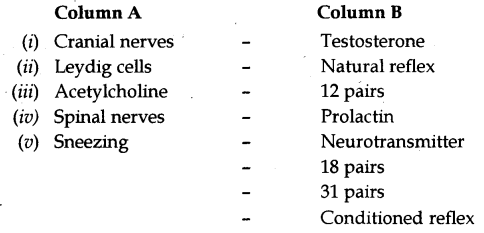
(e) Choose the correct answer from the four options given below :
[5]
(e) While recording the pulse rate, where exactly does a doctor press on our wrist?
A. Nerve
B. Vein
C. Artery
D. Capillary
(e) In a human male, a sperm will contain :
A. Both X and Y chromosomes
B. Only Y Chromosomes
C. Only X chromosome
D. Either X or Y Chromosomes
(e) A muscular wall is absent in :
A. Capillary
B. Venule
C. Arteriole
D. Vein
(e) On which day of the menstrual cycle does ovulation take place ?
A. 5th day
B. 28th day
C. 14th day
D. 1st day
(e) Which one of the following does not affect the rate of transpiration ?
A. Light
B. Humidity
C. Wind
D. Age of the plant
(f) Identify the ODD term in each set and name the CATEG
[5]
Example: glucose, starch, cellulose, calcium, Odd term: calcium.
(f) Addison’s disease, Cushing’s Syndrome, Acromegaly, Leukemia.
(f) Insulin, Adrenaline, Pepsin, Thyroxine.
(f) Axon, Dendron, Photon, Cyton.
(f) Chicken pox, Colour blindness, Haemophilia, Albinism.
(f) Polythene bag, Crop residue, Animal waste, Decaying vegetable.
(g) Expand the following biological abbreviations :
[5]
(g) ABA
(g) IAA
(g) ATP
(g) DNA
(g) TSH
(h) (i) Study the picture given below and answer the following questions:
[5]
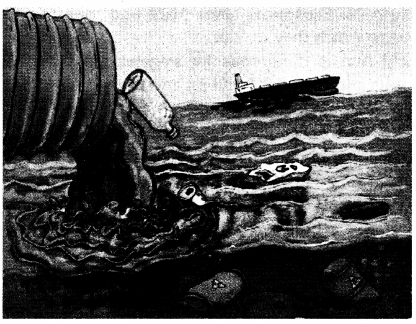
(i) Identify the type of pollution.
(i) Name one pollutant that causes the above pollution.
(i) Mention the impact of this pollution on human health.
(i) State one measure to control this pollution.
(i) What is a ‘Pollutant’? Explain the term.
(a) The layer of the eyeball that provide nourishment to the eye. (a) One gaseous compound which depletes the ozone layer.
(a) The structure which connects the placenta and the foetus.
(a) A pair of corresponding chromosomes of the same shape and size and derived one from each parent.
(a) The compound formed when haemoglobin combines with carbon dioxide in blood.
(b) Correct and rewrite the statement by changing the biological term that is underlined for each statement:
[5]
(b) The theory of Inheritance of Acquired Characters was proposed by Watson and Crick.
(b) The protective sac which develops around the developing embryo is called the Pericardium.
(b) Maintaining balance of the body and coordinating muscular activities is carried by the cerebrum.
(b) The kidney is composed of number of neurons.
(b) The part of the eye which can be donated from a clinically dead person is the Retina.
(c) Give suitable biological reasons for the following statements :
[5]
(c) The birth rate in India is very high.
(c) Carbon monoxide is dangerous when inhaled.
(c) Root hairs become flaccid and droop when excess fertilizers are added to the moist soil around them.
(c) Acid rain is harmful to the environment.
(c) All life on Earth is supported by Photosynthesis.
(d) Match the items given in Column A with the most appropriate ones in Column B and rewrite the correct matching pairs.
[5]
(e) Choose the correct answer from the four options given below :
[5]
(e) While recording the pulse rate, where exactly does a doctor press on our wrist?
A. Nerve
B. Vein
C. Artery
D. Capillary
(e) In a human male, a sperm will contain :
A. Both X and Y chromosomes
B. Only Y Chromosomes
C. Only X chromosome
D. Either X or Y Chromosomes
(e) A muscular wall is absent in :
A. Capillary
B. Venule
C. Arteriole
D. Vein
(e) On which day of the menstrual cycle does ovulation take place ?
A. 5th day
B. 28th day
C. 14th day
D. 1st day
(e) Which one of the following does not affect the rate of transpiration ?
A. Light
B. Humidity
C. Wind
D. Age of the plant
(f) Identify the ODD term in each set and name the CATEG
[5]
Example: glucose, starch, cellulose, calcium, Odd term: calcium.
(f) Addison’s disease, Cushing’s Syndrome, Acromegaly, Leukemia.
(f) Insulin, Adrenaline, Pepsin, Thyroxine.
(f) Axon, Dendron, Photon, Cyton.
(f) Chicken pox, Colour blindness, Haemophilia, Albinism.
(f) Polythene bag, Crop residue, Animal waste, Decaying vegetable.
(g) Expand the following biological abbreviations :
[5]
(g) ABA
(g) IAA
(g) ATP
(g) DNA
(g) TSH
(h) (i) Study the picture given below and answer the following questions:
[5]
(i) Identify the type of pollution.
(i) Name one pollutant that causes the above pollution.
(i) Mention the impact of this pollution on human health.
(i) State one measure to control this pollution.
(i) What is a ‘Pollutant’? Explain the term.
(a) The layer of the eyeball that provide nourishment to the eye. (a) One gaseous compound which depletes the ozone layer.
(a) The structure which connects the placenta and the foetus.
(a) A pair of corresponding chromosomes of the same shape and size and derived one from each parent.
(a) The compound formed when haemoglobin combines with carbon dioxide in blood.
(b) Correct and rewrite the statement by changing the biological term that is underlined for each statement:
[5]
(b) The theory of Inheritance of Acquired Characters was proposed by Watson and Crick.
(b) The protective sac which develops around the developing embryo is called the Pericardium.
(b) Maintaining balance of the body and coordinating muscular activities is carried by the cerebrum.
(b) The kidney is composed of number of neurons.
(b) The part of the eye which can be donated from a clinically dead person is the Retina.
(c) Give suitable biological reasons for the following statements :
[5]
(c) The birth rate in India is very high.
(c) Carbon monoxide is dangerous when inhaled.
(c) Root hairs become flaccid and droop when excess fertilizers are added to the moist soil around them.
(c) Acid rain is harmful to the environment.
(c) All life on Earth is supported by Photosynthesis.
(d) Match the items given in Column A with the most appropriate ones in Column B and rewrite the correct matching pairs.
[5]
(e) Choose the correct answer from the four options given below :
[5]
(e) While recording the pulse rate, where exactly does a doctor press on our wrist?
A. Nerve
B. Vein
C. Artery
D. Capillary
(e) In a human male, a sperm will contain :
A. Both X and Y chromosomes
B. Only Y Chromosomes
C. Only X chromosome
D. Either X or Y Chromosomes
(e) A muscular wall is absent in :
A. Capillary
B. Venule
C. Arteriole
D. Vein
(e) On which day of the menstrual cycle does ovulation take place ?
A. 5th day
B. 28th day
C. 14th day
D. 1st day
(e) Which one of the following does not affect the rate of transpiration ?
A. Light
B. Humidity
C. Wind
D. Age of the plant
(f) Identify the ODD term in each set and name the CATEG
[5]
Example: glucose, starch, cellulose, calcium, Odd term: calcium.
(f) Addison’s disease, Cushing’s Syndrome, Acromegaly, Leukemia.
(f) Insulin, Adrenaline, Pepsin, Thyroxine.
(f) Axon, Dendron, Photon, Cyton.
(f) Chicken pox, Colour blindness, Haemophilia, Albinism.
(f) Polythene bag, Crop residue, Animal waste, Decaying vegetable.
(g) Expand the following biological abbreviations :
[5]
(g) ABA
(g) IAA
(g) ATP
(g) DNA
(g) TSH
(h) (i) Study the picture given below and answer the following questions:
[5]
(i) Identify the type of pollution.
(i) Name one pollutant that causes the above pollution.
(i) Mention the impact of this pollution on human health.
(i) State one measure to control this pollution.
(i) What is a ‘Pollutant’? Explain the term.Ans : (a) (a) Choroid
(a) Chlorofluorocarbon
(a) Umbilical Cord
(a) Homologous Chromosome
(a) Carbaminohaemoglobin
(b) (b) The theory of inheritance of Acquired Characters was proposed by Jean Baptiste de Lamark.
(b) The protective sac which develops around the developing embryo is called amnion.
(b) Maintaining balance of the body and coordinating muscular activities is carried out by the Cerebellum.
(b) The kidney is composed of number of nephrons.
(b) The part of the eye which can be donated from a clinically dead person is cornea.
(c) (c) Due to better medical care there is a fall in death rate both for infants and the old. As long as birth rate exceeds death rate population grows rapidly.
(c) Haemoglobin has very strong affinity for carbon monoxide, forming a stable compound carboxyhaemoglobin. This cuts down the capacity of blood for transporting oxygen, sometimes resulting in death.
(c) Excessive fertilizers make the soil hypertonic as compared to root hair cells. Exosmosis takes place and root hair cells become flaccid due to which they droop.
(c) Acid rain is dangerous for vegetation, decays building materials, paints and corrodes building and monuments and statues. It acidifies lakes and streams which affect aquatic life.
(c) Provides oxygen for respiration. Provides food and maintains food chain.
(d)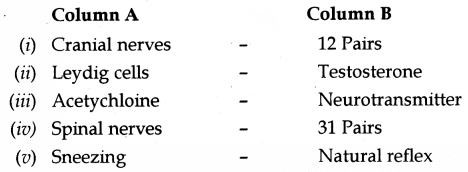
(e) (e) C. Artery
(e) A. Both X and Y chromosomes
(e) A. Capillary
(e) C. 14th day
(e) D. Age of the plant
(f)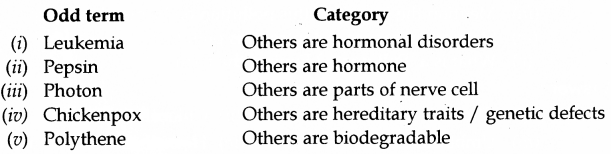
(f) (f) (f) (f) (f) (g) (g) Abscisic acid
(g) Indole acetic acid
(g) Adenosine triphosphate
(g) Deoxyribonucleic acid
(g) Thyroid stimulating hormone
(h) (i) (i) Water pollution
(i) Detergents, Chemicals
(i) Cholera, Jaundice, Typhoid, Dysentery, Diarrhoea
(i) We should treat the poisonous substances and discharge materials and toxic substances coming out of the homes and factories before discharging them into the rivers and ponds. We should not mix petroleum substances in the water. Dead bodies should not be thrown in the river. We should set more and more sewage treatment plants that play a crucial role in the reclaimed polluted water. Effective steps should be taken to outlaw dumping of wastes into a river or other water sources.
(i) Agents causing pollution are called pollutants.
Example, Gaseous pollutants are so2, co2 and co.
Chemical pollutants like fertilizers, pesticide and insecticide.
(a) Choroid
(a) Chlorofluorocarbon
(a) Umbilical Cord
(a) Homologous Chromosome
(a) Carbaminohaemoglobin
(b) (b) The theory of inheritance of Acquired Characters was proposed by Jean Baptiste de Lamark.
(b) The protective sac which develops around the developing embryo is called amnion.
(b) Maintaining balance of the body and coordinating muscular activities is carried out by the Cerebellum.
(b) The kidney is composed of number of nephrons.
(b) The part of the eye which can be donated from a clinically dead person is cornea.
(c) (c) Due to better medical care there is a fall in death rate both for infants and the old. As long as birth rate exceeds death rate population grows rapidly.
(c) Haemoglobin has very strong affinity for carbon monoxide, forming a stable compound carboxyhaemoglobin. This cuts down the capacity of blood for transporting oxygen, sometimes resulting in death.
(c) Excessive fertilizers make the soil hypertonic as compared to root hair cells. Exosmosis takes place and root hair cells become flaccid due to which they droop.
(c) Acid rain is dangerous for vegetation, decays building materials, paints and corrodes building and monuments and statues. It acidifies lakes and streams which affect aquatic life.
(c) Provides oxygen for respiration. Provides food and maintains food chain.
(d)
(e) (e) C. Artery
(e) A. Both X and Y chromosomes
(e) A. Capillary
(e) C. 14th day
(e) D. Age of the plant
(f)
(f) (f) (f) (f) (f) (g) (g) Abscisic acid
(g) Indole acetic acid
(g) Adenosine triphosphate
(g) Deoxyribonucleic acid
(g) Thyroid stimulating hormone
(h) (i) (i) Water pollution
(i) Detergents, Chemicals
(i) Cholera, Jaundice, Typhoid, Dysentery, Diarrhoea
(i) We should treat the poisonous substances and discharge materials and toxic substances coming out of the homes and factories before discharging them into the rivers and ponds. We should not mix petroleum substances in the water. Dead bodies should not be thrown in the river. We should set more and more sewage treatment plants that play a crucial role in the reclaimed polluted water. Effective steps should be taken to outlaw dumping of wastes into a river or other water sources.
(i) Agents causing pollution are called pollutants.
Example, Gaseous pollutants are so2, co2 and co.
Chemical pollutants like fertilizers, pesticide and insecticide.
(a) Choroid
(a) Chlorofluorocarbon
(a) Umbilical Cord
(a) Homologous Chromosome
(a) Carbaminohaemoglobin
(b) (b) The theory of inheritance of Acquired Characters was proposed by Jean Baptiste de Lamark.
(b) The protective sac which develops around the developing embryo is called amnion.
(b) Maintaining balance of the body and coordinating muscular activities is carried out by the Cerebellum.
(b) The kidney is composed of number of nephrons.
(b) The part of the eye which can be donated from a clinically dead person is cornea.
(c) (c) Due to better medical care there is a fall in death rate both for infants and the old. As long as birth rate exceeds death rate population grows rapidly.
(c) Haemoglobin has very strong affinity for carbon monoxide, forming a stable compound carboxyhaemoglobin. This cuts down the capacity of blood for transporting oxygen, sometimes resulting in death.
(c) Excessive fertilizers make the soil hypertonic as compared to root hair cells. Exosmosis takes place and root hair cells become flaccid due to which they droop.
(c) Acid rain is dangerous for vegetation, decays building materials, paints and corrodes building and monuments and statues. It acidifies lakes and streams which affect aquatic life.
(c) Provides oxygen for respiration. Provides food and maintains food chain.
(d)
(e) (e) C. Artery
(e) A. Both X and Y chromosomes
(e) A. Capillary
(e) C. 14th day
(e) D. Age of the plant
(f)
(f) (f) (f) (f) (f) (g) (g) Abscisic acid
(g) Indole acetic acid
(g) Adenosine triphosphate
(g) Deoxyribonucleic acid
(g) Thyroid stimulating hormone
(h) (i) (i) Water pollution
(i) Detergents, Chemicals
(i) Cholera, Jaundice, Typhoid, Dysentery, Diarrhoea
(i) We should treat the poisonous substances and discharge materials and toxic substances coming out of the homes and factories before discharging them into the rivers and ponds. We should not mix petroleum substances in the water. Dead bodies should not be thrown in the river. We should set more and more sewage treatment plants that play a crucial role in the reclaimed polluted water. Effective steps should be taken to outlaw dumping of wastes into a river or other water sources.
(i) Agents causing pollution are called pollutants.
Example, Gaseous pollutants are so2, co2 and co.
Chemical pollutants like fertilizers, pesticide and insecticide.
- #1-anullnullName the following :
[5]
(a) The layer of the eyeball that provide nourishment to the eye. (a) One gaseous compound which depletes the ozone layer.
(a) The structure which connects the placenta and the foetus.
(a) A pair of corresponding chromosomes of the same shape and size and derived one from each parent.
(a) The compound formed when haemoglobin combines with carbon dioxide in blood.
(b) Correct and rewrite the statement by changing the biological term that is underlined for each statement:
[5]
(b) The theory of Inheritance of Acquired Characters was proposed by Watson and Crick.
(b) The protective sac which develops around the developing embryo is called the Pericardium.
(b) Maintaining balance of the body and coordinating muscular activities is carried by the cerebrum.
(b) The kidney is composed of number of neurons.
(b) The part of the eye which can be donated from a clinically dead person is the Retina.
(c) Give suitable biological reasons for the following statements :
[5]
(c) The birth rate in India is very high.
(c) Carbon monoxide is dangerous when inhaled.
(c) Root hairs become flaccid and droop when excess fertilizers are added to the moist soil around them.
(c) Acid rain is harmful to the environment.
(c) All life on Earth is supported by Photosynthesis.
(d) Match the items given in Column A with the most appropriate ones in Column B and rewrite the correct matching pairs.
[5]
(e) Choose the correct answer from the four options given below :
[5]
(e) While recording the pulse rate, where exactly does a doctor press on our wrist?
A. Nerve
B. Vein
C. Artery
D. Capillary
(e) In a human male, a sperm will contain :
A. Both X and Y chromosomes
B. Only Y Chromosomes
C. Only X chromosome
D. Either X or Y Chromosomes
(e) A muscular wall is absent in :
A. Capillary
B. Venule
C. Arteriole
D. Vein
(e) On which day of the menstrual cycle does ovulation take place ?
A. 5th day
B. 28th day
C. 14th day
D. 1st day
(e) Which one of the following does not affect the rate of transpiration ?
A. Light
B. Humidity
C. Wind
D. Age of the plant
(f) Identify the ODD term in each set and name the CATEG
[5]
Example: glucose, starch, cellulose, calcium, Odd term: calcium.
(f) Addison’s disease, Cushing’s Syndrome, Acromegaly, Leukemia.
(f) Insulin, Adrenaline, Pepsin, Thyroxine.
(f) Axon, Dendron, Photon, Cyton.
(f) Chicken pox, Colour blindness, Haemophilia, Albinism.
(f) Polythene bag, Crop residue, Animal waste, Decaying vegetable.
(g) Expand the following biological abbreviations :
[5]
(g) ABA
(g) IAA
(g) ATP
(g) DNA
(g) TSH
(h) (i) Study the picture given below and answer the following questions:
[5]
(i) Identify the type of pollution.
(i) Name one pollutant that causes the above pollution.
(i) Mention the impact of this pollution on human health.
(i) State one measure to control this pollution.
(i) What is a ‘Pollutant’? Explain the term.
(a) The layer of the eyeball that provide nourishment to the eye. (a) One gaseous compound which depletes the ozone layer.
(a) The structure which connects the placenta and the foetus.
(a) A pair of corresponding chromosomes of the same shape and size and derived one from each parent.
(a) The compound formed when haemoglobin combines with carbon dioxide in blood.
(b) Correct and rewrite the statement by changing the biological term that is underlined for each statement:
[5]
(b) The theory of Inheritance of Acquired Characters was proposed by Watson and Crick.
(b) The protective sac which develops around the developing embryo is called the Pericardium.
(b) Maintaining balance of the body and coordinating muscular activities is carried by the cerebrum.
(b) The kidney is composed of number of neurons.
(b) The part of the eye which can be donated from a clinically dead person is the Retina.
(c) Give suitable biological reasons for the following statements :
[5]
(c) The birth rate in India is very high.
(c) Carbon monoxide is dangerous when inhaled.
(c) Root hairs become flaccid and droop when excess fertilizers are added to the moist soil around them.
(c) Acid rain is harmful to the environment.
(c) All life on Earth is supported by Photosynthesis.
(d) Match the items given in Column A with the most appropriate ones in Column B and rewrite the correct matching pairs.
[5]
(e) Choose the correct answer from the four options given below :
[5]
(e) While recording the pulse rate, where exactly does a doctor press on our wrist?
A. Nerve
B. Vein
C. Artery
D. Capillary
(e) In a human male, a sperm will contain :
A. Both X and Y chromosomes
B. Only Y Chromosomes
C. Only X chromosome
D. Either X or Y Chromosomes
(e) A muscular wall is absent in :
A. Capillary
B. Venule
C. Arteriole
D. Vein
(e) On which day of the menstrual cycle does ovulation take place ?
A. 5th day
B. 28th day
C. 14th day
D. 1st day
(e) Which one of the following does not affect the rate of transpiration ?
A. Light
B. Humidity
C. Wind
D. Age of the plant
(f) Identify the ODD term in each set and name the CATEG
[5]
Example: glucose, starch, cellulose, calcium, Odd term: calcium.
(f) Addison’s disease, Cushing’s Syndrome, Acromegaly, Leukemia.
(f) Insulin, Adrenaline, Pepsin, Thyroxine.
(f) Axon, Dendron, Photon, Cyton.
(f) Chicken pox, Colour blindness, Haemophilia, Albinism.
(f) Polythene bag, Crop residue, Animal waste, Decaying vegetable.
(g) Expand the following biological abbreviations :
[5]
(g) ABA
(g) IAA
(g) ATP
(g) DNA
(g) TSH
(h) (i) Study the picture given below and answer the following questions:
[5]
(i) Identify the type of pollution.
(i) Name one pollutant that causes the above pollution.
(i) Mention the impact of this pollution on human health.
(i) State one measure to control this pollution.
(i) What is a ‘Pollutant’? Explain the term.Ans : (a) Choroid
(a) Chlorofluorocarbon
(a) Umbilical Cord
(a) Homologous Chromosome
(a) Carbaminohaemoglobin
(b) (b) The theory of inheritance of Acquired Characters was proposed by Jean Baptiste de Lamark.
(b) The protective sac which develops around the developing embryo is called amnion.
(b) Maintaining balance of the body and coordinating muscular activities is carried out by the Cerebellum.
(b) The kidney is composed of number of nephrons.
(b) The part of the eye which can be donated from a clinically dead person is cornea.
(c) (c) Due to better medical care there is a fall in death rate both for infants and the old. As long as birth rate exceeds death rate population grows rapidly.
(c) Haemoglobin has very strong affinity for carbon monoxide, forming a stable compound carboxyhaemoglobin. This cuts down the capacity of blood for transporting oxygen, sometimes resulting in death.
(c) Excessive fertilizers make the soil hypertonic as compared to root hair cells. Exosmosis takes place and root hair cells become flaccid due to which they droop.
(c) Acid rain is dangerous for vegetation, decays building materials, paints and corrodes building and monuments and statues. It acidifies lakes and streams which affect aquatic life.
(c) Provides oxygen for respiration. Provides food and maintains food chain.
(d)
(e) (e) C. Artery
(e) A. Both X and Y chromosomes
(e) A. Capillary
(e) C. 14th day
(e) D. Age of the plant
(f)
(f) (f) (f) (f) (f) (g) (g) Abscisic acid
(g) Indole acetic acid
(g) Adenosine triphosphate
(g) Deoxyribonucleic acid
(g) Thyroid stimulating hormone
(h) (i) (i) Water pollution
(i) Detergents, Chemicals
(i) Cholera, Jaundice, Typhoid, Dysentery, Diarrhoea
(i) We should treat the poisonous substances and discharge materials and toxic substances coming out of the homes and factories before discharging them into the rivers and ponds. We should not mix petroleum substances in the water. Dead bodies should not be thrown in the river. We should set more and more sewage treatment plants that play a crucial role in the reclaimed polluted water. Effective steps should be taken to outlaw dumping of wastes into a river or other water sources.
(i) Agents causing pollution are called pollutants.
Example, Gaseous pollutants are so2, co2 and co.
Chemical pollutants like fertilizers, pesticide and insecticide.
(a) Choroid
(a) Chlorofluorocarbon
(a) Umbilical Cord
(a) Homologous Chromosome
(a) Carbaminohaemoglobin
(b) (b) The theory of inheritance of Acquired Characters was proposed by Jean Baptiste de Lamark.
(b) The protective sac which develops around the developing embryo is called amnion.
(b) Maintaining balance of the body and coordinating muscular activities is carried out by the Cerebellum.
(b) The kidney is composed of number of nephrons.
(b) The part of the eye which can be donated from a clinically dead person is cornea.
(c) (c) Due to better medical care there is a fall in death rate both for infants and the old. As long as birth rate exceeds death rate population grows rapidly.
(c) Haemoglobin has very strong affinity for carbon monoxide, forming a stable compound carboxyhaemoglobin. This cuts down the capacity of blood for transporting oxygen, sometimes resulting in death.
(c) Excessive fertilizers make the soil hypertonic as compared to root hair cells. Exosmosis takes place and root hair cells become flaccid due to which they droop.
(c) Acid rain is dangerous for vegetation, decays building materials, paints and corrodes building and monuments and statues. It acidifies lakes and streams which affect aquatic life.
(c) Provides oxygen for respiration. Provides food and maintains food chain.
(d)
(e) (e) C. Artery
(e) A. Both X and Y chromosomes
(e) A. Capillary
(e) C. 14th day
(e) D. Age of the plant
(f)
(f) (f) (f) (f) (f) (g) (g) Abscisic acid
(g) Indole acetic acid
(g) Adenosine triphosphate
(g) Deoxyribonucleic acid
(g) Thyroid stimulating hormone
(h) (i) (i) Water pollution
(i) Detergents, Chemicals
(i) Cholera, Jaundice, Typhoid, Dysentery, Diarrhoea
(i) We should treat the poisonous substances and discharge materials and toxic substances coming out of the homes and factories before discharging them into the rivers and ponds. We should not mix petroleum substances in the water. Dead bodies should not be thrown in the river. We should set more and more sewage treatment plants that play a crucial role in the reclaimed polluted water. Effective steps should be taken to outlaw dumping of wastes into a river or other water sources.
(i) Agents causing pollution are called pollutants.
Example, Gaseous pollutants are so2, co2 and co.
Chemical pollutants like fertilizers, pesticide and insecticide.
- #1-a-iThe layer of the eyeball that provide nourishment to the eye.Ans : Choroid
- #1-a-iiOne gaseous compound which depletes the ozone layer.Ans : Chlorofluorocarbon
- #1-a-iiiThe structure which connects the placenta and the foetus.Ans : Umbilical Cord
- #1-a-ivA pair of corresponding chromosomes of the same shape and size and derived one from each parent.Ans : Homologous Chromosome
- #1-a-vThe compound formed when haemoglobin combines with carbon dioxide in blood.Ans : Carbaminohaemoglobin
- #1-bCorrect and rewrite the statement by changing the biological term that is underlined for each statement:
[5]
- #1-b-iThe theory of Inheritance of Acquired Characters was proposed by Watson and Crick.
Ans : The theory of inheritance of Acquired Characters was proposed by Jean Baptiste de Lamark.
- #1-b-iiThe protective sac which develops around the developing embryo is called the Pericardium.
Ans : The protective sac which develops around the developing embryo is called amnion.
- #1-b-iiiMaintaining balance of the body and coordinating muscular activities is carried by the cerebrum.Ans : Maintaining balance of the body and coordinating muscular activities is carried out by the Cerebellum.
- #1-b-ivThe kidney is composed of number of neurons.Ans : The kidney is composed of number of nephrons.
- #1-b-vThe part of the eye which can be donated from a clinically dead person is the Retina.Ans : The part of the eye which can be donated from a clinically dead person is cornea.
- #1-cGive suitable biological reasons for the following statements :
[5]
- #1-c-iThe birth rate in India is very high.Ans : Due to better medical care there is a fall in death rate both for infants and the old. As long as birth rate exceeds death rate population grows rapidly.