NEET-XII-Biology
03: Human Reproduction
Note: Please signup/signin free to get personalized experience.
Note: Please signup/signin free to get personalized experience.
10 minutes can boost your percentage by 10%
03-Human Reproduction
Note: Please signup/signin free to get personalized experience.
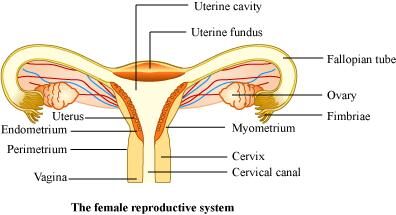
- Qstn #4Write two major functions each of testis and ovary.
Ans : Functions of the Testis:
(a) They produce male gametes called spermatozoa by the process of spermatogenesis.
(b) The leydig cells of the seminiferous tubules secrete the male sex hormone called testosterone. Testosterone aids the development of secondary sex characteristics in males.
Functions of the ovary:
(a) They produce female gametes called ova by the process of oogenesis.
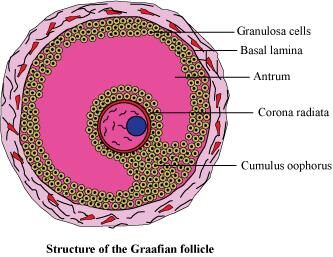
(b) The growing Graffian follicles secrete the female sex hormone called estrogen. Estrogen aids the development of secondary sex characteristics in females.
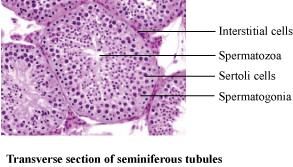
- Qstn #5Describe the structure of a seminiferous tubule.
Ans : The production of sperms in the testes takes place in a highly coiled structure called the seminiferous tubules. These tubules are located in the testicular lobules. Each seminiferous tubule is lined by germinal epithelium. It is lined on its inner side by two types of cells namely spermatogonia and sertoli cells respectively. Spermatogonia are male germ cells which produce primary spermatocytes by meiotic divisions. Primary spermatocytes undergo further meiotic division to form secondary spermatocytes and finally, spermatids. Spermatids later metamorphoses into male gametes called spermatozoa. Sertoli cells are known as nurse cells of the testes as they provide nourishment to the germ cells. There are large polygonal cells known as interstitial cells or leydig cells just adjacent to seminiferous tubules. These cells secrete the male hormone called testosterone.
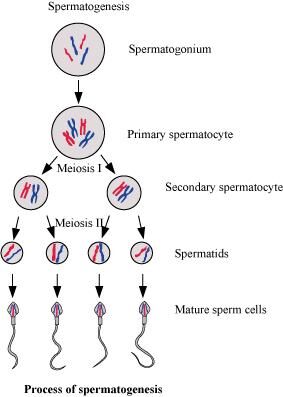
- Qstn #6What is spermatogenesis? Briefly describe the process of spermatogenesis.
Ans : Spermatogenesis is the process of the production of sperms from the immature germ cells in males. It takes place in seminiferous tubules present inside the testes. During spermatogenesis, a diploid spermatogonium (male germ cell) increases its size to form a diploid primary spermatocyte. This diploid primary spermatocyte undergoes first meiotic division (meiosis I), which is a reductional division to form two equal haploid secondary spermatocytes. Each secondary spermatocyte then undergoes second meiotic division (meiosis II) to form two equal haploid spermatids. Hence, a diploid spermatogonium produces four haploid spermatids. These spermatids are transformed into spermatozoa (sperm) by the process called spermiogenesis.
- Qstn #7Name the hormones involved in regulation of spermatogenesis.
Ans : Follicle-stimulating hormones (FSH) and luteinizing hormones (LH) are secreted by gonadotropin releasing hormones from the hypothalamus .These hormones are involved in the regulation of the process of spermatogenesis. FSH acts on sertoli cells, whereas LH acts on leydig cells of the testis and stimulates the process of spermatogenesis.
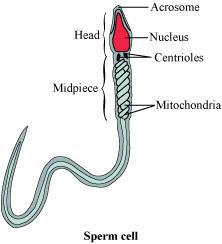
- Qstn #8Define spermiogenesis and spermiation.
Ans : Spermiogenesis: It is the process of transforming spermatids into matured spermatozoa or sperms.
Spermiation: It is the process when mature spermatozoa are released from the sertoli cells into the lumen of seminiferous tubules.
- Qstn #10What are the major components of seminal plasma?
Ans : Semen (produced in males) is composed of sperms and seminal plasma. The major components of the seminal plasma in the male reproductive system are mucus, spermatozoa, and various secretions of accessory glands. The seminal plasma is rich in fructose, calcium, ascorbic acid, and certain enzymes. It provides nourishment and protection to sperms.
- Qstn #11What are the major functions of male accessory ducts and glands?
Ans : The male accessory ducts are vasa efferentia, epididymis, vas deferens, and rete testis. They play an important role in the transport and temporary storage of sperms. On the contrary, male accessory glands are seminal vesicles, prostate glands, and bulbourethral glands. These glands secrete fluids that lubricate the reproductive system and sperms. The sperms get dispersed in the fluid which makes their transportation into the female body easier. The fluid is rich in fructose, ascorbic acid, and certain enzymes. They also provide nutrients and activate the sperm.
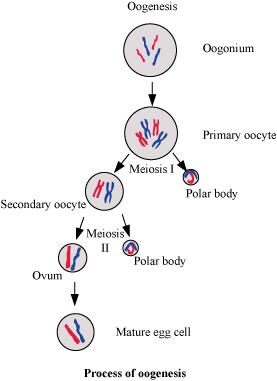
- Qstn #12What is oogenesis? Give a brief account of oogenesis.
Ans : Oogenesis is the process of the formation of a mature ovum from the oogonia in females. It takes place in the ovaries. During oogenesis, a diploid oogonium or egg mother cell increases in size and gets transformed into a diploid primary oocyte. This diploid primary oocyte undergoes first meiotic division i.e., meiosis I or reductional division to form two unequal haploid cells. The smaller cell is known as the first polar body, while the larger cell is known as the secondary oocyte. This secondary oocyte undergoes second meiotic division i.e., meiosis II or equational division and gives rise to a second polar body and an ovum. Hence, in the process of oogenesis, a diploid oogonium produces a single haploid ovum while two or three polar bodies are produced.
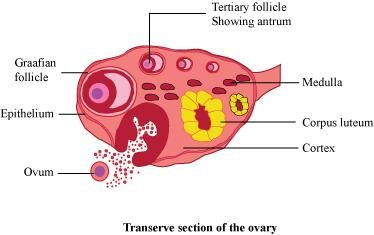
- #15-aCorpus luteumAns : Corpus luteum - Corpus luteum is formed from the ruptured Grafiaan follicle. It secretes progesterone hormone during the luteal phase of the menstrual cycle. A high level of progesterone inhibits the secretions of FSH and LH, thereby preventing ovulation. It also allows the endometrium of the uterus to proliferate and to prepare itself for implantation.
- #15-bEndometriumAns : Endometrium - It is the innermost lining of the uterus. It is rich in glands and undergoes cyclic changes during various phases of the menstrual cycle to prepare itself for the implantation of the embryo.